Retail & Grocery
QR codes can handle payment, coupons, barcode scanning, and sign-up in a grocery app. Here are five uses and what to watch for.
A grocery app that can scan has a lot to offer. A QR code or barcode turns the phone’s camera into a way to pay, save, and sign up without typing. We built a customer engagement app for a national grocery chain around payment by QR code at the register, and it taught us that scanning is useful in more places than checkout. Here are five.
| Use | What the shopper does |
|---|---|
| Payment at the register | Scans a QR code to pay |
| Coupons with payment | Gets savings in the same scan |
| App download redirect | Scans without the app and is sent to install it |
| Shopping list | Scans a product barcode to add it |
| Loyalty sign-up | Scans a loyalty card barcode to link an account |
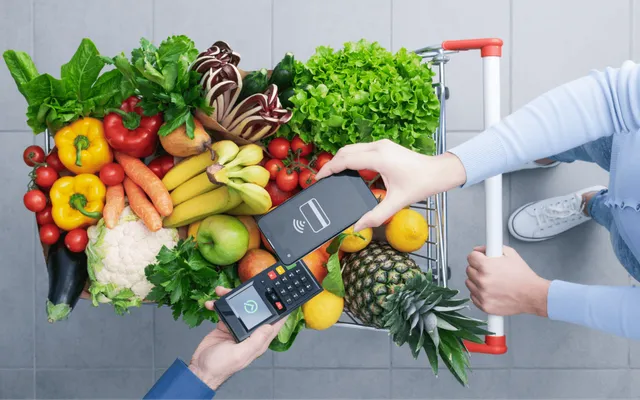
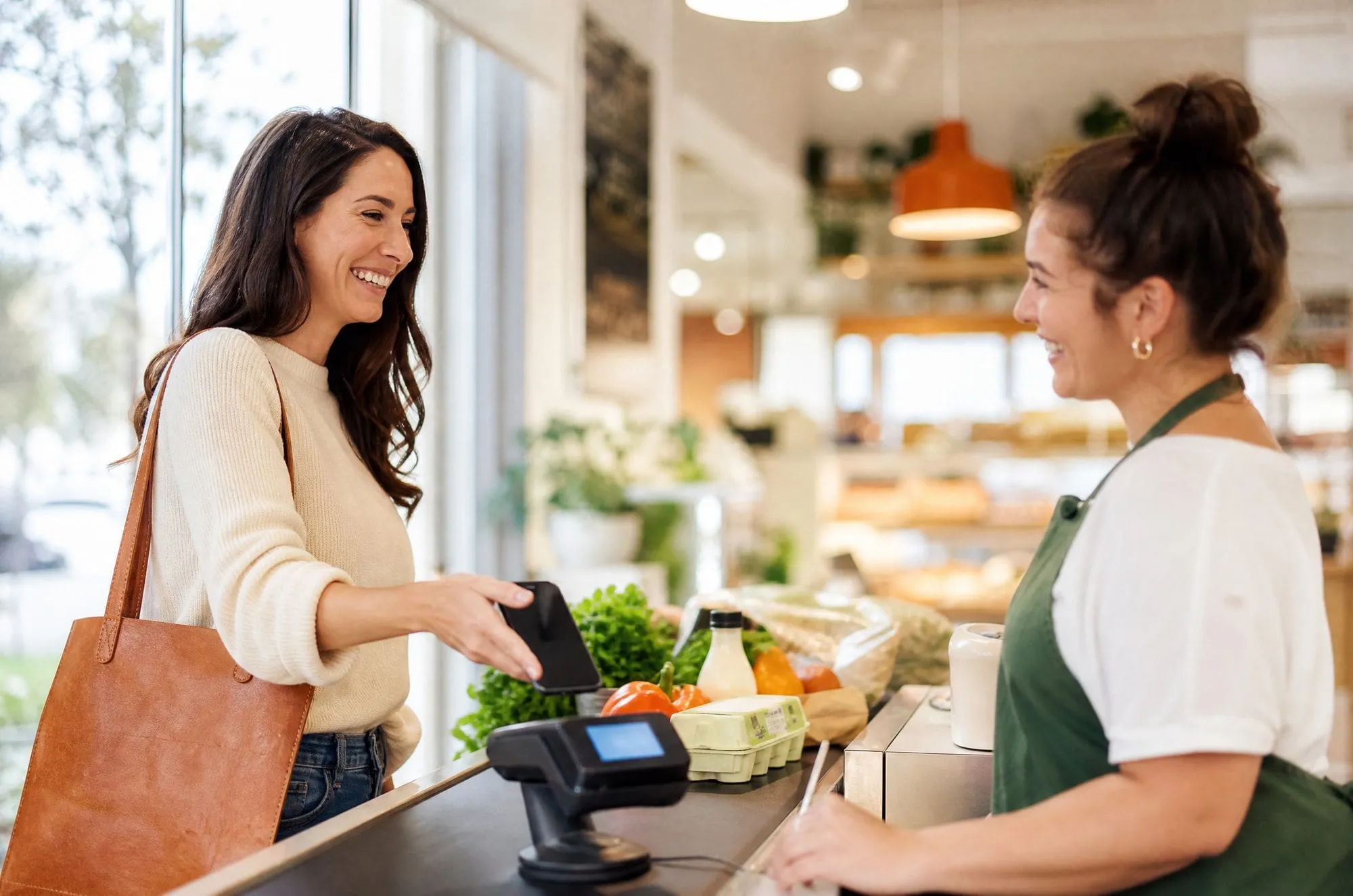
Shoppers pay by scanning a QR code with the store’s app. Walmart says its customers scan a QR code displayed on the same PIN pads already used at checkout, and Kroger’s app generates a single-use QR code after the shopper enters a PIN or uses biometrics. In the app we built for a national grocery chain, shoppers confirmed with a PIN or biometrics, chose a saved card, and scanned a QR code at checkout.
Because the camera does the scanning, this approach does not depend on a contactless chip in the phone. In our view, that is a real advantage for older phones.
Shoppers should not have to wonder whether they got every saving. Kroger describes its single-use code as carrying payment and loyalty information, including digital coupons and personalized offers, in one scan. The app we built had digital coupons shoppers could clip and search, tied to their shopping lists and the weekly ad. When coupons and payment live in the same app, checkout is where the savings show up.
QR codes at the checkout lane will be scanned by people who do not have your app. In our view, that is an opportunity. If a different scanner app reads the code, send the shopper to a web page that explains they can pay with their phone and links to the App Store or Google Play. A scan that goes nowhere is a missed introduction.
Typing a product name is slow. A barcode scanner lets shoppers add an item they have just used up by pointing the camera at the package. The app we built for the grocery chain had a barcode scanner for adding items to a shopping list. If the store’s product data allows it, a scan can also show the product, its aisle, and any savings that apply, which makes finding things easier.
Many loyalty cards carry a barcode. In our view, scanning it during sign-up is easier than typing a long number from the back of the card, and it lets existing members bring their account into the app without starting over.
As one option among several, yes. In August 2026, Walmart announced that Tap to Pay is coming to its stores and Sam’s Club locations, with plans to reach all U.S. stores and clubs by the end of 2026. It will sit next to cash, credit cards, and Walmart Pay, so shoppers choose how to pay. Our post on grocery apps and Scan & Go covers how that choice has developed, and Beyond the Cart covers mobile checkout in the store.
Be cautious of small barcodes. Phone cameras have improved, but they still focus less easily than the laser scanners at the register. If a shopper has to hold the phone so close that the camera cannot focus, the scan fails. Test scanning in these conditions:
If you are planning a scanning feature, our services page explains how we work with grocery teams, and you can see past projects in our work. Contact us to talk through your app.
The shopper opens the store's app and confirms, often with a PIN or biometrics. The app then shows a QR code for the register to scan, or scans a code displayed at the register. Walmart and Kroger both describe this flow.
It depends on the store's systems. Walmart says its customers scan a QR code shown on the PIN pads already at checkout. The camera in the shopper's phone does the scanning, which avoids relying on contactless chips.
Yes, as one option among several. Walmart is adding Tap to Pay while keeping Walmart Pay, so shoppers choose. Offering a QR option still helps shoppers whose phones or habits suit it.
Small barcodes. A phone camera has to focus on the code, and if the shopper must hold the phone too close, it will not. Test scanning on real packages, in store lighting, on older phones.

Get payment and loyalty working through a mobile scanning feature that works on any phone and in any store lighting.