Retail & Grocery
Shoppers still prefer the store, but they expect it to work like their apps. Here is where friction shows up and how grocers can remove it.
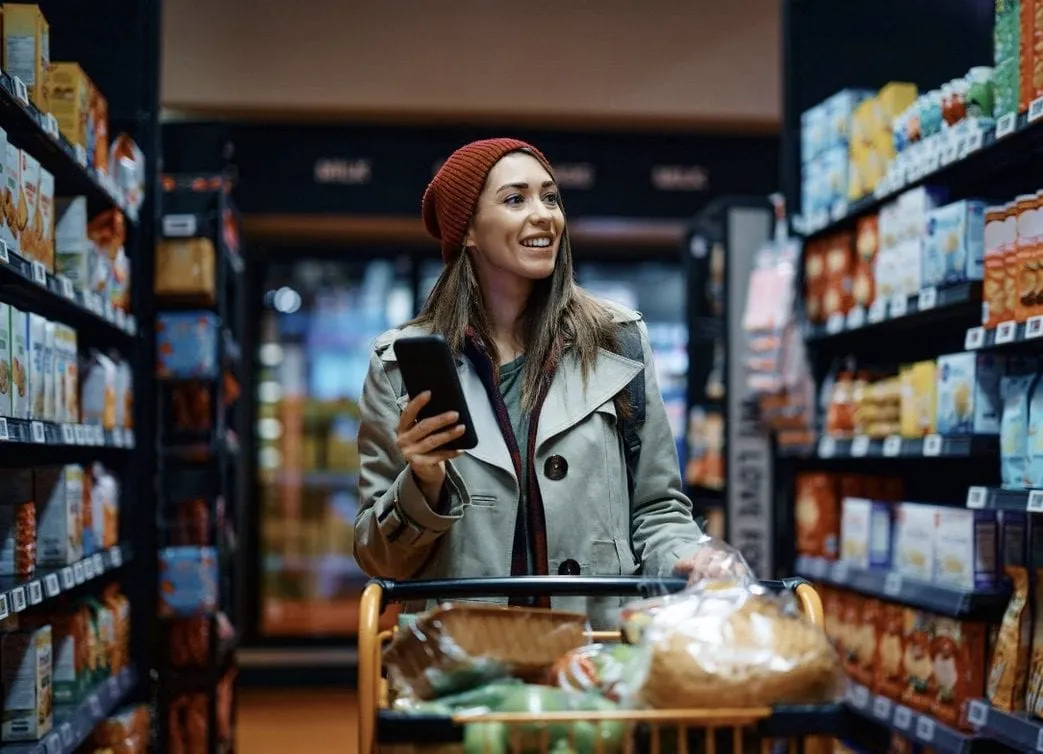
You walk into a grocery store after a long day at work. Your list has ten items, but aisle four feels like a maze, your usual pasta is nowhere in sight, and the checkout line reaches back to the frozen foods. The trip was supposed to be quick. Every extra minute makes the next trip somewhere else more likely.
Shoppers have not given up on the store. The job is making the physical trip as easy as the digital one.
They do. FMI’s 2026 U.S. Grocery Shopper Trends found that 54% of grocery shoppers always shop in-store at their primary store. The same research found that 71% are digitally engaged while they shop, and 54% use retailer apps on their phones in the aisle.
Shoppers walk in expecting the store and the app to work as one thing. Our earlier piece on how mobile rewired grocery retail covers how that expectation formed.
In our view, the real competitor of the traditional grocery store is not e-commerce. It is friction. Customers carry the ease of their favorite apps into the aisles, and the store often does not match it:
When the digital experience does not talk to the physical one, shoppers take their loyalty elsewhere.
Scan-and-go lets customers scan items with their phones as they shop and pay in the app, so the line disappears. In a survey of 1,044 U.S. consumers by NCR Voyix, a checkout technology vendor, 77% of the shoppers who prefer self-checkout said they do so because it is faster. The same survey found that 60% of shoppers who do not use self-checkout would be more inclined to if it were easier with more than 15 items.
Because a vendor ran the survey, read it as a signal of shopper preference, not a measure of results at any one store. We design mobile checkout and in-app experiences for retailers, and we would start with the basket sizes your shoppers actually carry.
It can, but we would treat it as a later step. In-app mapping that leads a shopper to the exact item, with a relevant promotion when they reach it, only works when the app knows what is on the shelf. Built on stale counts, it sends people to empty spots.
Staff tools matter as much as the shopper-facing ones. For Hy-Vee’s Fast & Fresh app, which serves the company’s convenience and fuel locations, we built curbside ordering where the customer sends an arrival notification and a store-side tool tells employees which order is waiting. Orders reach the people who fill them without anyone watching a screen at the counter.
Picture a grocery store that applies the same idea to shelves: an employee gets an alert when a product runs low and goes straight to it, instead of walking the store to find out. That is a hypothetical, not a project we have shipped, but it is the direction we would take.
Grocery does not have to choose between physical and digital. Both need to work from the same information. We would fix things in this order:
If you are weighing where to start, talk to us about your stores.
It removes the checkout line from the trip. The shopper scans items as they go and pays in the app, so the store keeps the in-person experience and loses the wait. In an NCR Voyix survey, shoppers who prefer self-checkout most often said they do because it is faster.
A broken connection between the app and the store. When the app shows stock or prices that do not match the shelf, shoppers stop trusting it, and loyalty follows.
Shoppers and staff both act on it. Accurate counts mean fewer wasted trips for customers, and they let employees restock from what is actually missing instead of walking the aisles to find out.
Yes. In FMI's 2026 U.S. Grocery Shopper Trends, 54% of shoppers said they always shop in-store at their primary store. The same research found that 54% use retailer apps while they are there.

Make your inventory trustworthy, checkout faster, and give staff the tools they need to help shoppers.
Retail & Grocery
Retail & Grocery
Retail & Grocery