Retail & Grocery
First-party data, app investment, unified shopping, changing shoppers, and AI: five grocery trends, checked against current research.
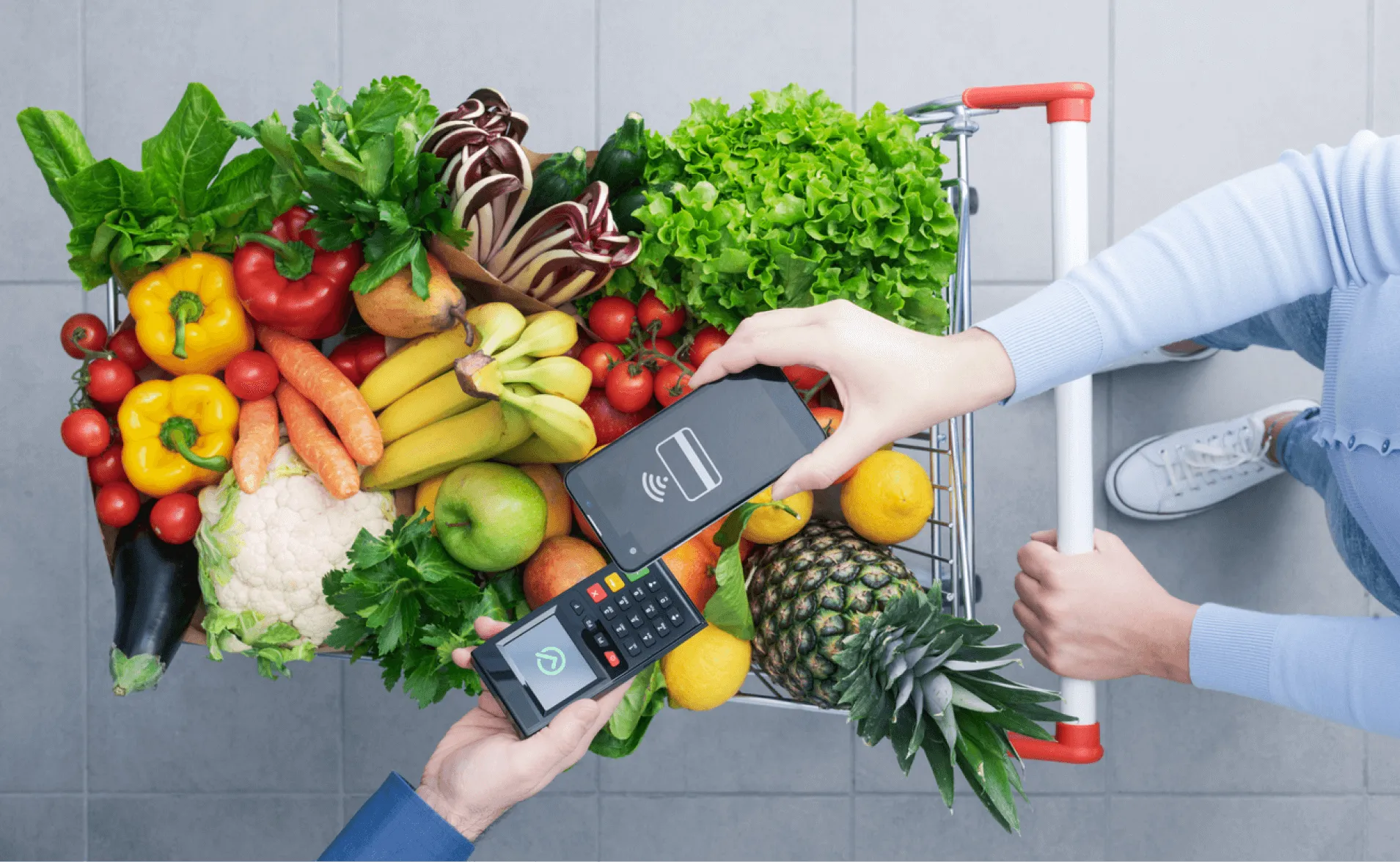
After a summer of webinars and a trip to Groceryshop, our team wrote down the trends we saw shaping grocery. We have since checked each one against current research. The thread running through all five is that shoppers move between the app, the web, and the aisle, and grocers have to keep up.
First-party data comes straight from shoppers: what they buy, what they search for, and how they use your app. It fills in who a customer is and how they shop, and it matters more as access to third-party data and cookies gets tighter. Shoppers are paying attention to how it is used. In Salesforce’s State of the Connected Customer, a survey of 14,300 consumers and business buyers worldwide, 79% said they are increasingly protective of their personal data, and 71% said they are more likely to trust a company with it if its use is clearly explained. That survey is not specific to grocery.
In our view, the practical route is a mobile experience that gives people a reason to sign in. Loyalty is the usual reason. In Bond’s 2026 Loyalty Report, which surveyed 20,591 U.S. loyalty program members, 85% said they are more likely to keep doing business with a brand that has a program. Those are self-reported answers, so we read them as a signal of attitude, not a measure of sales. The shopper is also already online: FMI reports that 77% of grocery shoppers are digitally engaged before they shop.
Ten years ago, having a presence in the app store was enough. It is not now. We hear from grocery brands that their apps no longer meet shopper needs or match the experiences their competitors offer. The spending data points the same way. In FMI’s The Food Retailing Industry Speaks 2026 study, which Grocery Dive summarized, food retailers put nearly 2% of total sales into technology in 2025, double the share from 2024, and 71% expect to spend more in 2026. That figure covers all technology, not only apps.
The app also has a job inside the store. FMI found that 54% of grocery shoppers use retailer apps on their phones while shopping in person. An app that was fine at launch is now compared with every other app on the phone, so a refresh is often the right project. Our services page covers how we approach it, and our history of grocery apps shows how the category got here.
Yes, and the numbers explain why. In its analysis summarized by FMI, NIQ says in-store shopping still accounts for about 80% of grocery sales, but e-commerce will drive most of the growth. NIQ projects U.S. online grocery sales of $452 billion by 2028, a 25.5% share of grocery-related sales. That is a projection, not a result.
FMI describes shoppers stitching together hybrid journeys across the app, the website, and the store. They expect to move from the phone to the aisle without starting over, whether that means order pickup, building a list, finding a product in the store, or checking inventory. In our view, the work is connecting those channels so each one does what it does best. Our guide to omnichannel retail covers what that takes.
Grocery is different from the rest of retail: shoppers want speed, convenience, and quick access to products. NIQ’s analysis calls speed a major competitive battleground: slow delivery erodes conversion and loyalty in key categories. It also finds that social commerce is growing, especially among Gen Z, with TikTok Shop and Instagram emerging as places where shoppers decide and buy.
Price pressure adds to it. In the FMI study Grocery Dive summarized, three-quarters of retailers said they expect economic concerns to affect how people shop this year, and 70% expect their operating costs to rise. Those are retailers’ expectations, not shopper survey results. With diverse shoppers and tight margins, a discovery phase that starts from how your shoppers actually behave helps decide which features earn a place.
At Groceryshop, nearly every conversation turned to AI, while grocers stayed cautious about which use cases justified the investment. That caution has eased. In the FMI study, 68% of food retailers said they use AI, up from 47% a year earlier, and 59% use generative AI, up from 43%. Shoppers are trying it too: in the FMI and NIQ report, 64% had at least tried generative AI. FMI calls agentic shopping, where an AI agent shops on your behalf, very early and still niche.
Adoption numbers do not tell you what works. We would start with narrow use cases that have a clear measure of success. We also use AI tools in our own development work, which our services page describes.
Talk with our team about which of these trends belongs on your roadmap.
Five stand out: first-party data, renewed investment in mobile apps, unified store and online shopping, shoppers who put speed and convenience first, and AI. They overlap, because the app is where most of them meet.
It comes directly from shoppers, so it shows who they are and how they shop. In Salesforce's research, 71% of customers said they are more likely to trust a company with personal data if its use is clearly explained, so grocers need to be open about what they collect and why.
NIQ projects that U.S. online grocery sales will reach $452 billion, or 25.5% of grocery-related sales, by 2028. In-store currently accounts for about 80% of grocery sales, so most shoppers will keep using both.
Most are. In FMI's 2026 industry survey, 68% of food retailers said they use AI, up from 47% a year earlier. The survey measures adoption, not results, so the useful question is which use cases are worth funding.

Connect your app, web, and store as shoppers move between them and expect the same seamless experience.