Retail & Grocery
How omnichannel retail unifies stores, apps, and websites into one customer experience, how it differs from multichannel, and what it takes to build.
Shoppers do not think in channels. They look something up on a phone, check a store’s stock, and pick it up on the way home. The brands that handle this well make every touchpoint recognize the customer. In a Harvard Business Review study of just over 46,000 customers of a major U.S. retailer with hundreds of stores, only 7% shopped online only and 20% shopped in store only. The other 73% used multiple channels during their shopping journey.
Omnichannel retail connects every shopping channel (stores, websites, mobile apps, social media, and customer service) into one customer experience. Unlike multichannel retail, which offers several disconnected ways to shop, omnichannel treats the journey as one, no matter where the customer interacts with the brand.
A connected experience lets customers:
In our view, this is now what shoppers expect, and friction between channels is where a retailer loses them.
Multichannel retail offers several ways to shop, but the channels usually run on their own inventories, pricing, and customer databases. A store might run one promotion while the website runs another. A customer might see an item in stock online and find it sold out at the store.
Omnichannel connects those channels around the customer’s journey. These are general tendencies, not rules:
| Multichannel | Omnichannel | |
|---|---|---|
| Channels | Run independently | Connected around the customer |
| Inventory and pricing | Often separate | Shared across channels |
| Customer data | Often separate | One profile across channels |
| Teams and goals | Each channel has its own | Shared goals across channels |
The difference reaches past the technology. It affects how teams are organized and how customer data is managed.
It can remove the friction between channels. In Salesforce’s “State of the Connected Customer” research (sixth edition), a survey of 14,300 consumers and business buyers worldwide, 79% of customers expect consistent interactions across departments, yet 55% say it generally feels like they are dealing with separate departments rather than one company.
In practice, that means customers do not repeat themselves when they switch channels, and they get consistent answers from whoever they talk to. We wrote about where that friction shows up in grocery in how to save the in-store experience.
The best evidence we found is the Harvard Business Review study. After the authors controlled for shopping experience, omnichannel customers spent an average of 4% more on every shopping occasion in the store and 10% more online than single-channel customers. Customers who used four or more channels spent 9% more in the store. Within six months, omnichannel customers made 23% more repeat trips to the retailer’s stores and were more likely to recommend the brand.
The authors are careful about cause: it remains an open question whether richer experiences led customers to spend and return more, or whether loyal, engaged customers simply use more channels. It is one retailer’s data, so treat it as a strong signal, not a guarantee.
Integration depends on backend systems that share customer data, purchase history, and preferences. Retailers often start with a mobile app that connects the in-store and online experience. We cover how mobile rewired grocery retail separately.
Real-time inventory visibility is the backbone of omnichannel. With Target’s app, shoppers can check an item’s availability at their store, and on Target.com a check other stores feature shows availability at other specific stores.
When visuals, tone of voice, and offers stay the same across channels, the experience feels intentional. In our view, that consistency is as much a design decision as a technical one.
The Nike App’s in-store features for members include scanning any product barcode to see available sizes and colors in store and online, “hearting” a favorite style so Nike can help the member find it in store, and using the Member Pass at checkout to link a purchase to their profile. Members can also buy online and pick up at a Nike store.
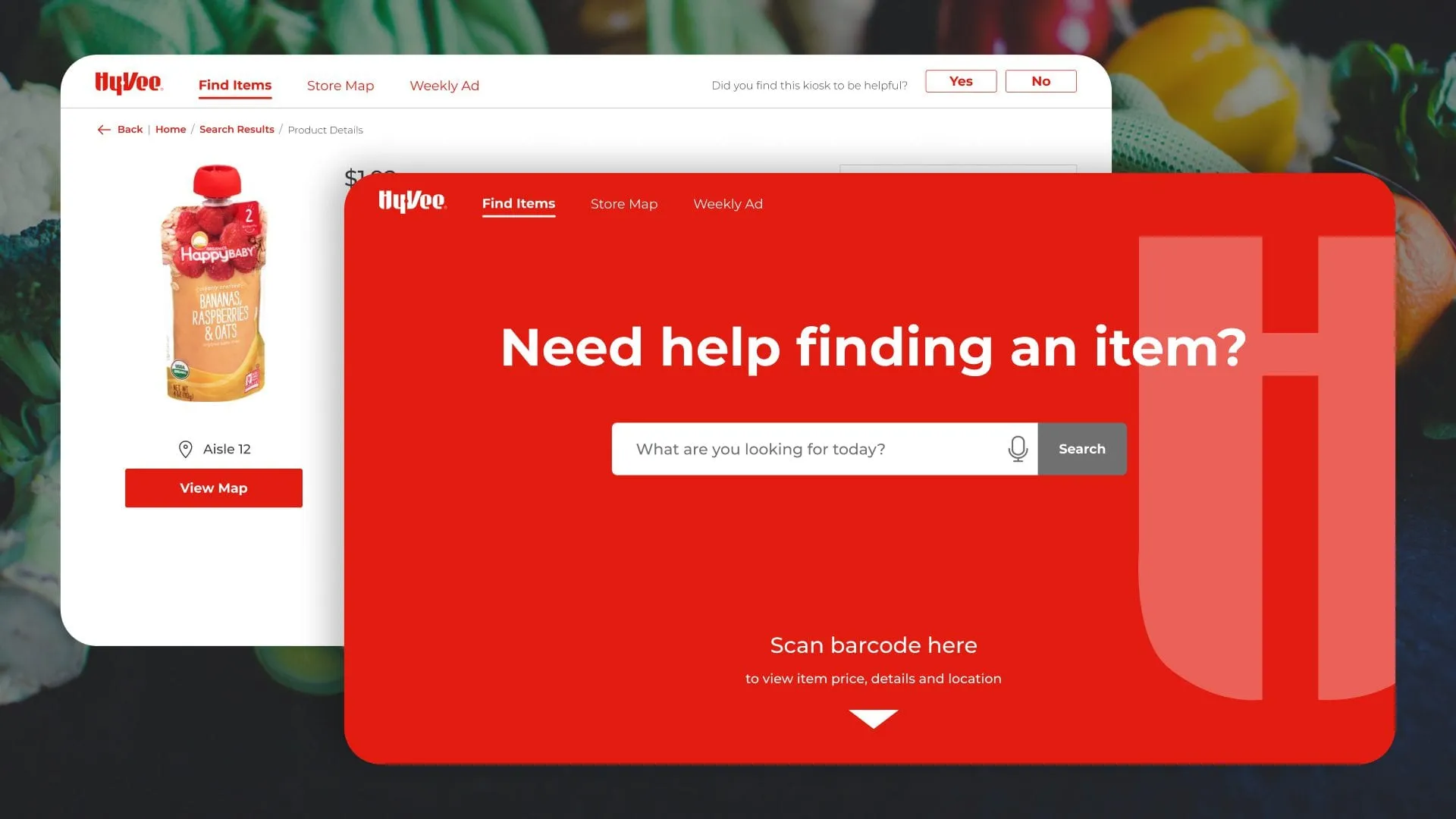
At one of its innovation stores, Hy-Vee worked with us on an in-store kiosk for finding products. Shoppers search for a product, see pricing and nutrition information and the aisle it is on, use a store map to get there, and browse the weekly ad. Because the kiosk runs on a public device, we measured usage in sessions and successful searches, and an in-app survey asked shoppers how the kiosk helped. The kiosk has logged 2,100 sessions per week and answered more than 8,400 questions a month. You can see more in our work.
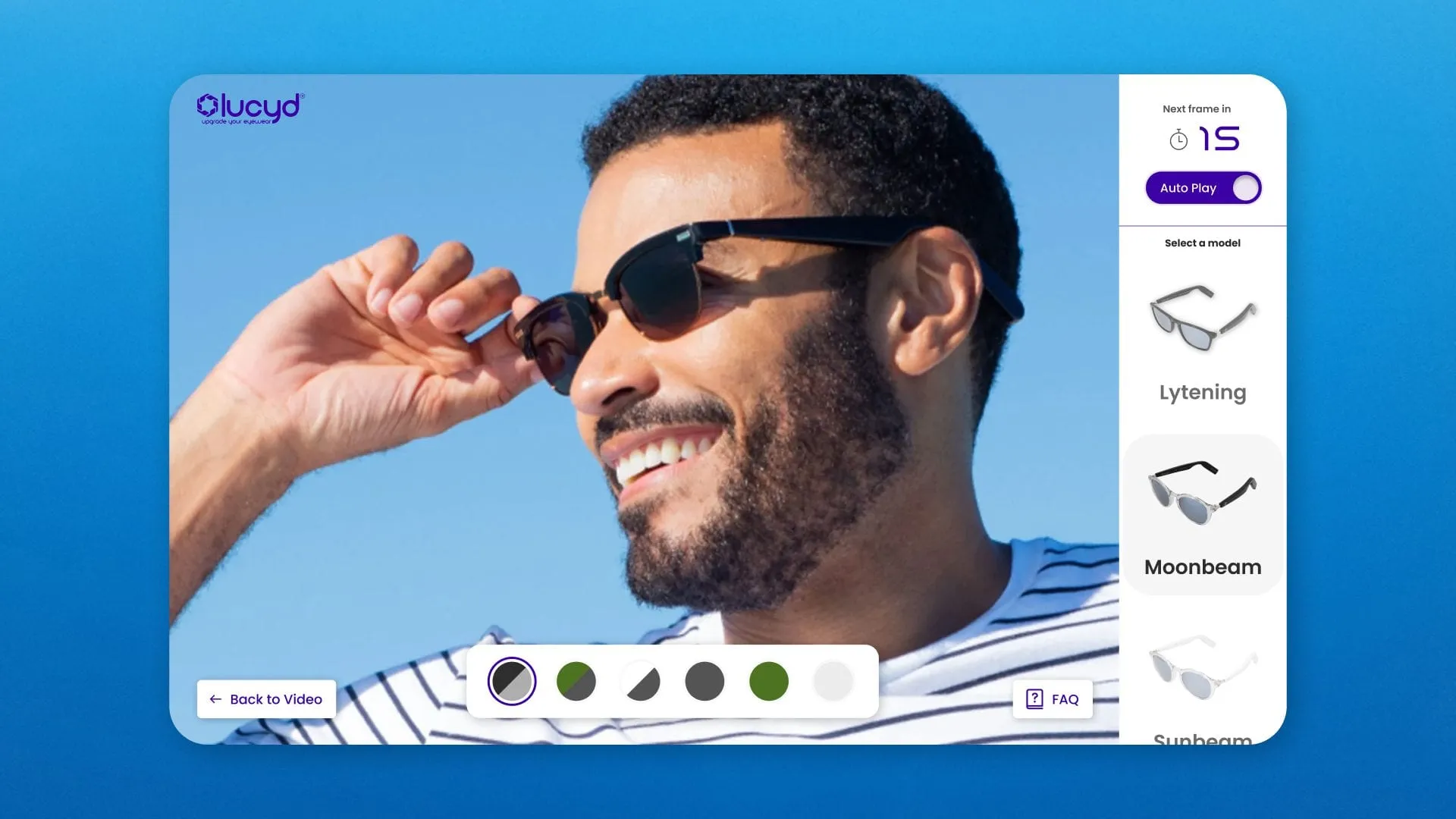
We built a virtual try-on kiosk for Lucyd’s smart eyewear. Shoppers see how the frames and lens tints look on them before buying, and an FAQ answers common questions. The kiosk also records which frames and tints people try and how long they spend with it.
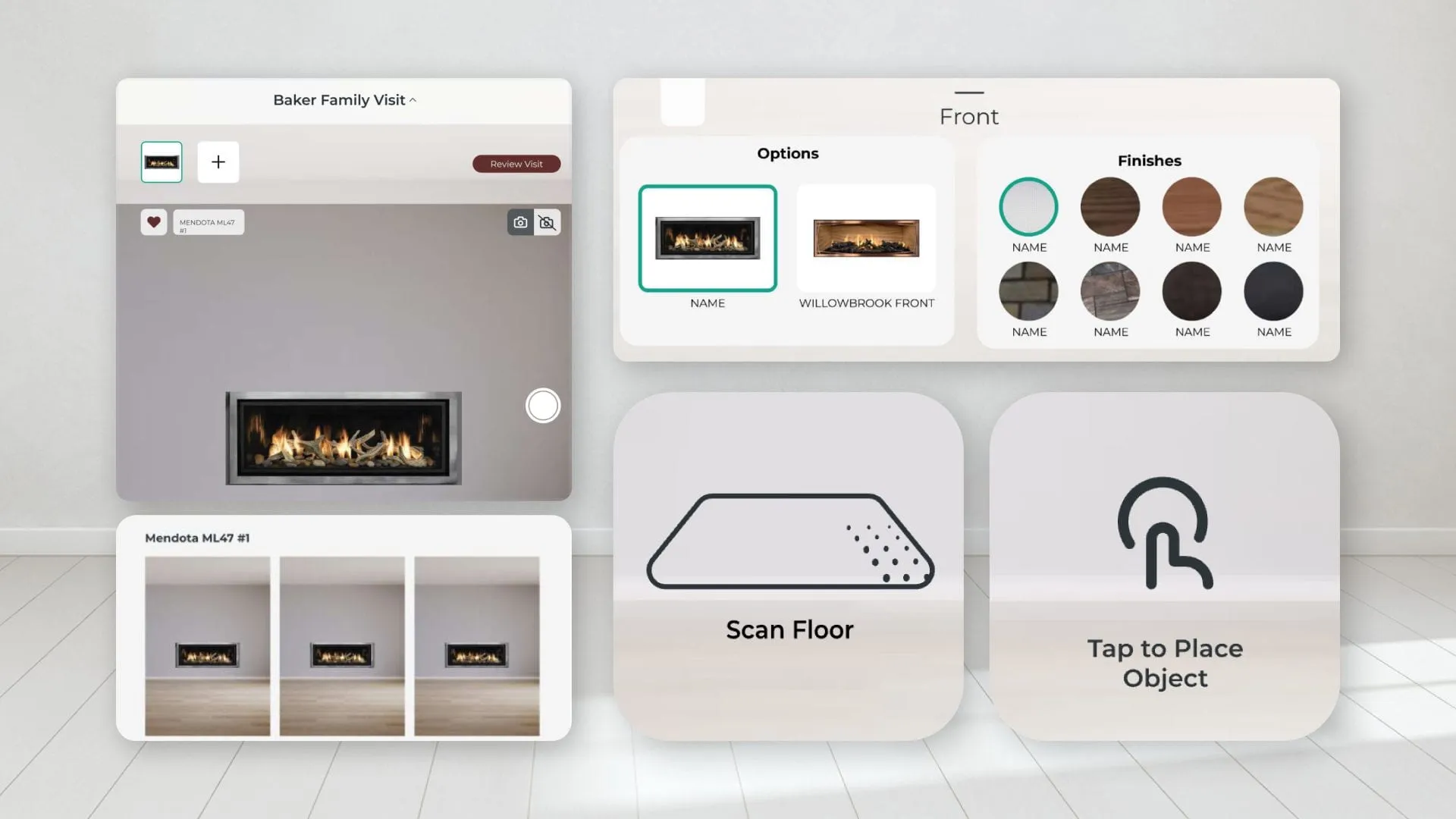
For Anderson’s Masonry Hearth & Home, we built an augmented reality fireplace visualizer that lets customers and sales representatives see the actual size of a fireplace in the room where it will be used. Our case study describes it as a proof of concept for Anderson’s team to begin rolling out and testing with customers.
In our experience, many retailers struggle because their online and in-store systems do not share data. The result is inventory mismatches, disconnected customer interactions, and extra manual work. The fix is to connect digital and physical touchpoints so each one sees the same information.
McKinsey’s report on omnichannel operations says that as a first step, companies need a cross-channel omnichannel team, and that without one it is very difficult to break down siloed thinking and operations. If in-store and online teams have separate goals, the customer feels it.
In our view, two areas are worth watching: personalization that adapts to a shopper’s behavior in the moment, and immersive tools that help customers picture a product in their own life. Our Anderson’s and Lucyd projects are early examples of the second, because they give an online or in-store shopper confidence before they buy.
We have built apps and kiosks for retail and grocery brands for more than a decade. At Shockoe, we design connected experiences that work with the systems a retailer already has. Our services page explains how we work with retail and grocery teams.
Planning a connected shopping experience? Talk to us.
An approach that unifies stores, websites, mobile apps, social media, and customer service into one experience. A shopper can start on one channel and finish on another with the same cart, prices, and service.
Multichannel retail offers several ways to shop, but each channel usually runs on its own inventory, pricing, and customer data. Omnichannel connects them, so the customer's history and preferences carry across channels.
In a Harvard Business Review study of just over 46,000 shoppers at a major U.S. retailer, omnichannel customers spent more per shopping occasion and made more repeat trips than single-channel customers. The authors note that it remains an open question whether the experience caused this or loyal customers simply use more channels.
Integration across touchpoints, shared inventory visibility, and consistent branding and messaging. McKinsey adds that a cross-channel team is a first step toward breaking down siloed thinking and operations.
Legacy systems that do not share data, and organizations where in-store and online teams work separately. Both make it hard to give a customer one consistent experience.

Customers expect consistent prices, inventory, and service across every channel they use today.
Retail & Grocery
Retail & Grocery
Retail & Grocery