Hospitality
In hospitality, excellence has always been measured by the human touch. Here is how digital tools back it up instead of replacing it.
In hospitality, excellence has always been measured by the human touch.
That touch still matters most. But in our view it works best when a smart digital foundation sits behind it. Technology has moved from a nice amenity to a main driver of loyalty and efficiency.
At Shockoe, we think innovation in hospitality is not about filling a hotel with screens. It is about using technology to remove friction and make room for memorable moments.
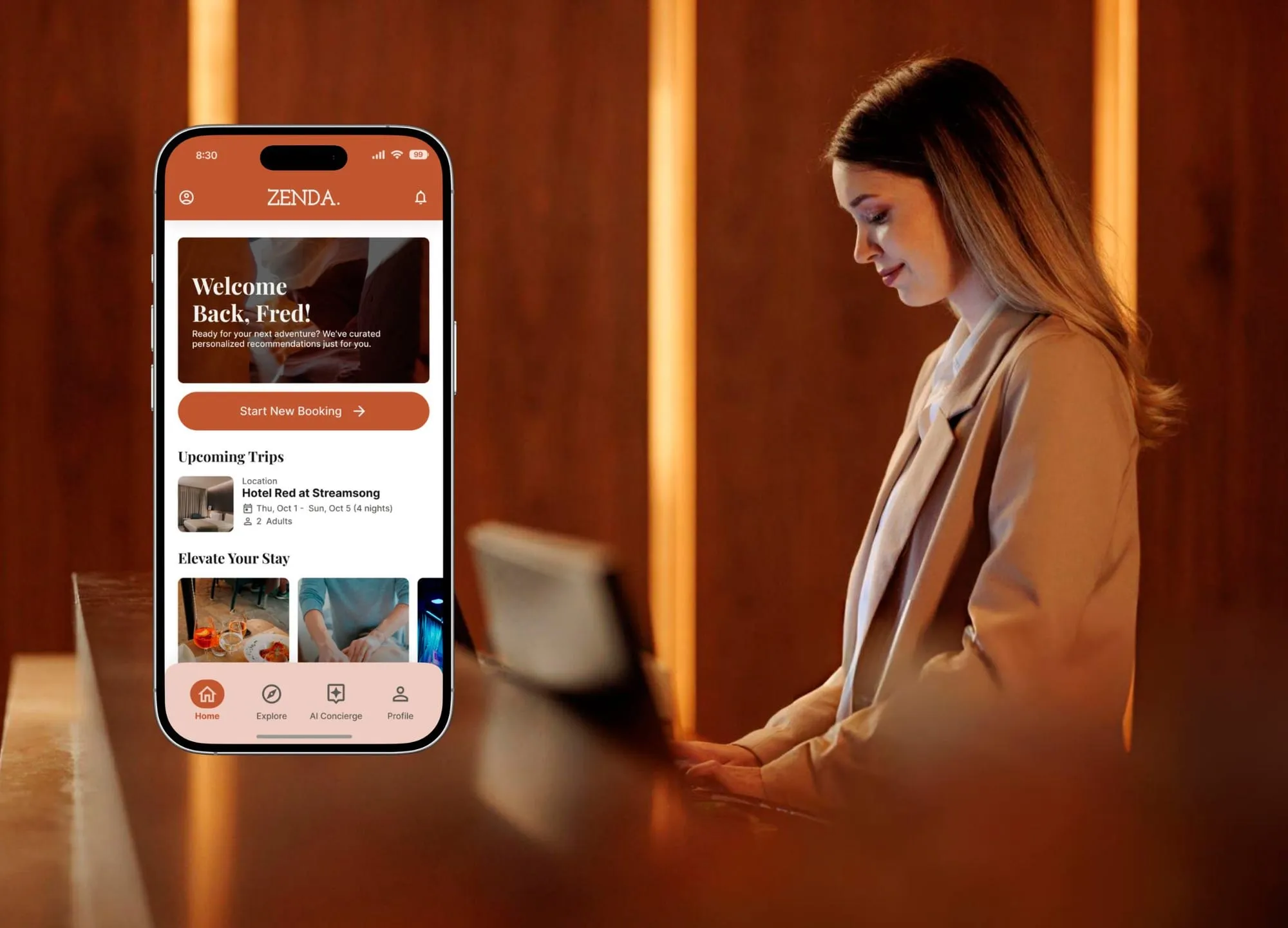
Today’s travelers, on business or on vacation, arrive expecting to be in control. The smartphone has become the remote control for the whole stay.
Guests who use a hotel’s app also tend to be happier. The J.D. Power 2025 North America Hotel Guest Satisfaction Index, based on 39,219 branded-hotel guests, found that guests with their hotel’s app downloaded scored satisfaction at 699 on a 1,000-point scale, 68 points higher than guests who do not use it. That is a link, not proof that the app caused the difference. Guests who download an app may simply be more engaged to begin with.
The biggest advantage technology offers is information. When a hotel’s digital systems are connected, the hotel can stop selling rooms and start offering experiences that fit the guest.
Picture a hypothetical guest who always asks for a high floor and a room at 70°F (21°C). With a connected profile and room controls, the room can be set that way before the guest opens the door. Details like that turn a functional stay into one worth telling friends about.
Guests say this kind of fit matters. In a July 2025 TakeUp report of 350 travelers who regularly stay at independent properties, 45% were willing to pay more for unique or high-quality experiences, and 11% looked for the lowest possible rate. TakeUp sells revenue management software and the sample is independent-hotel guests, so read it as a signal, not a market measurement. We explore how guest data supports this in how data brings the personal touch back to hospitality.
Not all of the impact is guest facing. Much of it happens in the back of house.
The same study did not test connecting the controls to a property management system, which the manufacturers said could add savings. That is the kind of integration where digital work pays off.
We do not build technology for its own sake. We build products that stay out of the guest’s way and give a hospitality brand a clearer picture of who its guests are. Our services page explains how we work, and our work shows our projects.
In our view, digital tools are now the baseline for a competitive hotel, not a luxury. The hard part is not adopting them one by one. It is joining them into a single strategy built around the guest. For a closer look at what guests want from it, read the technology guests really want.
Travelers can compare options in a few taps. The hotels that win are the ones that can say, before the guest arrives, “We know you, and we are ready for you.”
Want to talk through your guests’ digital experience? Get in touch.
No. In our view, it removes routine steps such as waiting in line or repeating a request, so staff have more time for the conversations that guests remember.
Many say so. In a 2025 Mews survey of 2,000 US adults who had traveled in the past year, 70% said they were likely to check in with an app or a self-service kiosk, and 82% of Gen Z travelers said the same. Mews commissioned the survey, so treat it as a vendor survey.
They are linked to it. The J.D. Power 2025 North America Hotel Guest Satisfaction Index found that guests who had their hotel's app downloaded scored satisfaction 68 points higher on a 1,000-point scale. That is a correlation, not proof that the app caused the higher score.
Some can. A U.S. Department of Energy study of occupancy-based thermostats in six hotels found HVAC energy savings from 10.8% to 26.5% while rooms were rented but empty. Results varied by property and climate.

Digital handles routine transactions so staff spend more time on the moments guests remember.