
Hospitality
A guest's phone is crowded real estate. Hotel apps that read like brochures get deleted, and apps that save time get kept. Here is how to build the second kind.
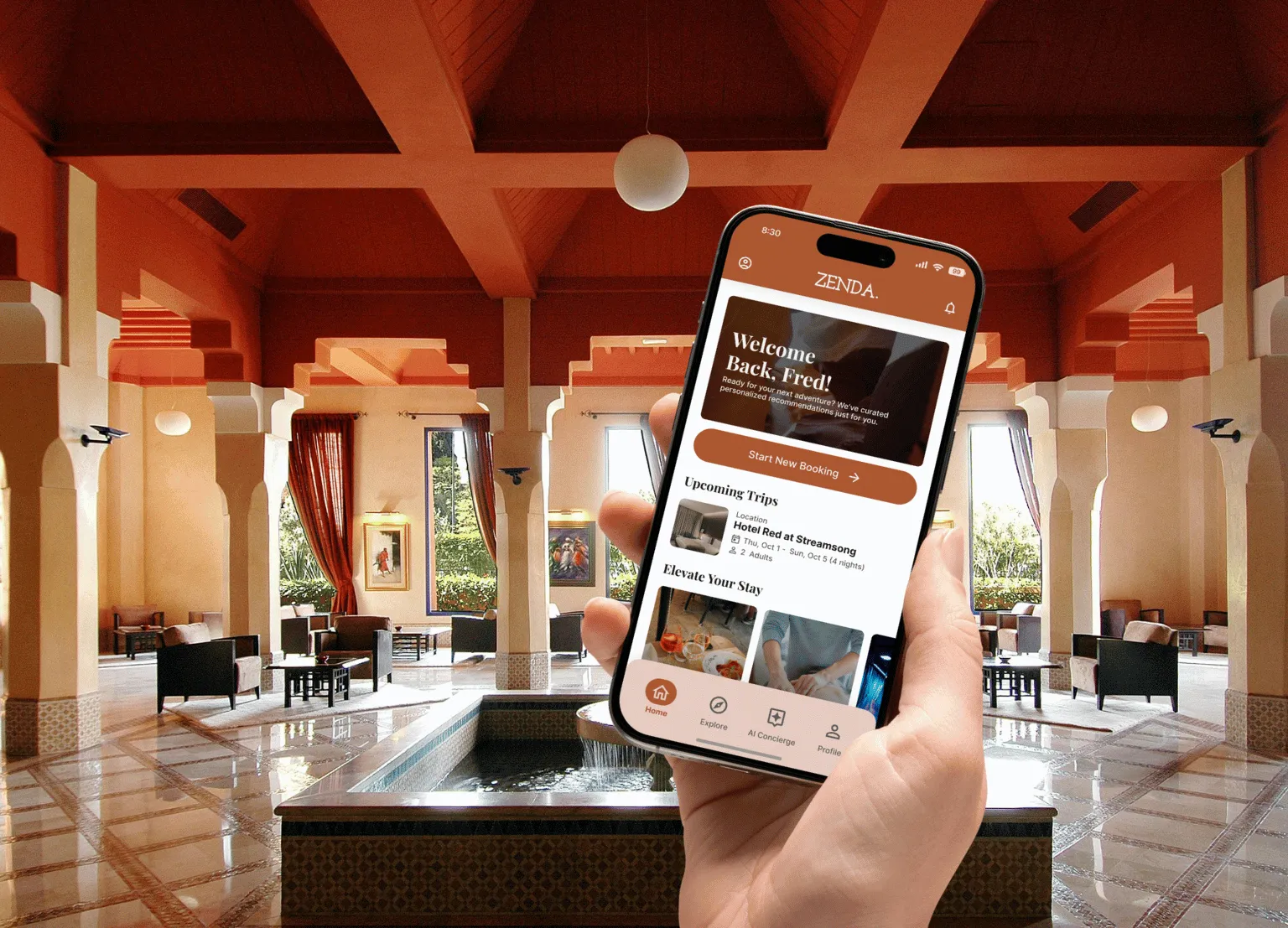
A guest’s phone is crowded real estate. For hotels, that has produced a clear symptom: app fatigue. Many properties pour resources into an app that ends up in the digital graveyard of low download rates, or gets deleted the moment the room key is handed back at the front desk.
In our view, the problem is not the technology. It is purpose. If an app is a digital brochure, it is noise. To get past the download barrier, design a utility.
Utility over information. Guests do not download an app to read the hotel’s history. They download it to make the stay easier. We would build the features that remove friction:
Does an app earn its keep? Evidence is mixed but encouraging. In J.D. Power’s 2025 North America Hotel Guest Satisfaction Index, based on 39,219 branded hotel guests who stayed between May 2024 and May 2025, overall satisfaction was 699 on a 1,000-point scale among guests who had their hotel’s app downloaded, 68 points higher than among guests who did not use their brand’s app. That is an association. Guests who download an app may already be more engaged, so we read it as a hint, not proof.
Room service and concierge requests have traditionally been slow and prone to error. An app can shorten the path. In our view the best versions do three things:
We explored the same instinct in why guests abandon your booking engine: a guest should not have to repeat themselves.
Many hospitality apps fail because they are built on assumptions. We start with friction analysis: find exactly where the guest journey breaks, then design technology to repair those points. If guests regularly ask for airport transport, the app can offer it before they ask. That is anticipation, not marketing. We look at the data side in how data brings the personal touch back to hospitality.
This is often the real challenge. Property management systems can be old and do not always work well with other software. We would not try to replace them overnight. The practical approach is an integration layer that lets those systems communicate with a modern guest interface.
That is the idea behind Zenda, our hospitality platform. According to the Zenda site, it offers one branded app for the stay, with mobile check-in and digital keys, an AI concierge for conversational booking, mobile food and drink ordering, restaurant reservations, and a loyalty program with a single points balance. It lists integrations with property management systems such as Opera, Mews, Stayntouch, and Cloudbeds, and with point of sale, golf, and access control systems. See more of our approach in our work.
Overcoming app fatigue takes a change in mindset. It is not about how many features fit in the code. It is about how many tasks you can take off the guest’s plate. When an app saves a guest 15 minutes of waiting and gives them control of the stay, the question changes from “Why should I download this?” to “How could I stay here without it?”
To see the platform, visit zenda.cx. To talk through what your guests would use, get in touch. Our services cover strategy, design, and mobile development for hospitality.
Guests are reluctant to download one more app, especially for a short stay. Apps that only share information, like a digital brochure, tend to be deleted. Apps that save time or give the guest control are more likely to be kept.
Guests who have their hotel's app downloaded report higher satisfaction. In J.D. Power's 2025 hotel study, their score was 699 on a 1,000-point scale, 68 points higher than for guests without the app. That shows an association, not that the app caused it.
The ones that remove the most friction: skipping the front desk line, ordering without a phone call, and asking for something without waiting on hold. In our view, a feature earns its place by saving the guest time.
Through an integration layer that sits between the app and systems such as the property management system, point of sale, and loyalty. The older systems keep their jobs while the app presents one interface to the guest.

Skip the brochure and build utility: mobile check-in, skipping lines, and ordering without hold times.