Sports & Fan Experience
The roar of the crowd is the draw. Long lines and downtime are what fans remember. Here is how venues can remove the friction and use the quiet moments well.
When we think of a sporting event, we think of the passion, the roar of the crowd, the last-second basket. For the fan, there is another side that is less exciting: long lines to get in, the scramble to buy food, and the frustration of missing a key play while waiting for a drink.
Hospitality in professional sports has evolved. It is no longer only about who wins. It is about how the fan feels from the parking lot to the walk home. In our view, the way to turn a spectator into a guest is a frictionless experience.
Stadiums have traditionally treated people as a crowd. Technology now makes it possible to treat each fan as a guest. We think sports technology should do one thing well: remove the obstacles between the fan and the game. If fans have to fight the venue to get what they need, the hospitality has failed.
Most do. In IBM’s 2025 sports fan study, an online survey of 20,864 fans across 12 countries, 82% said they use apps during events. Of those, 91% engage with them, mostly for real-time commentary, stats, and enhanced in-stadium experiences. That survey is global and covers sports fans broadly, not one league or venue.
The takeaway is practical: the phone is already in the fan’s hand. The question is whether the venue’s own app gives them something useful.
Because they cost the fan the game and cost the venue sales. Mashgin, a company that sells self-checkout kiosks, reports that 81% of the sports fans it surveyed would buy more if lines were shorter. The page gives no sample size or dates, so we read it as a vendor signal and not a benchmark.
Mobile tools can attack the line in a few ways. These are patterns we would recommend, not features we are claiming for a specific project:
Our mobile product work starts with the fan’s time.
Not every wait can be removed. Halftime and pre-match are built in. The better move is to make that time worth having.
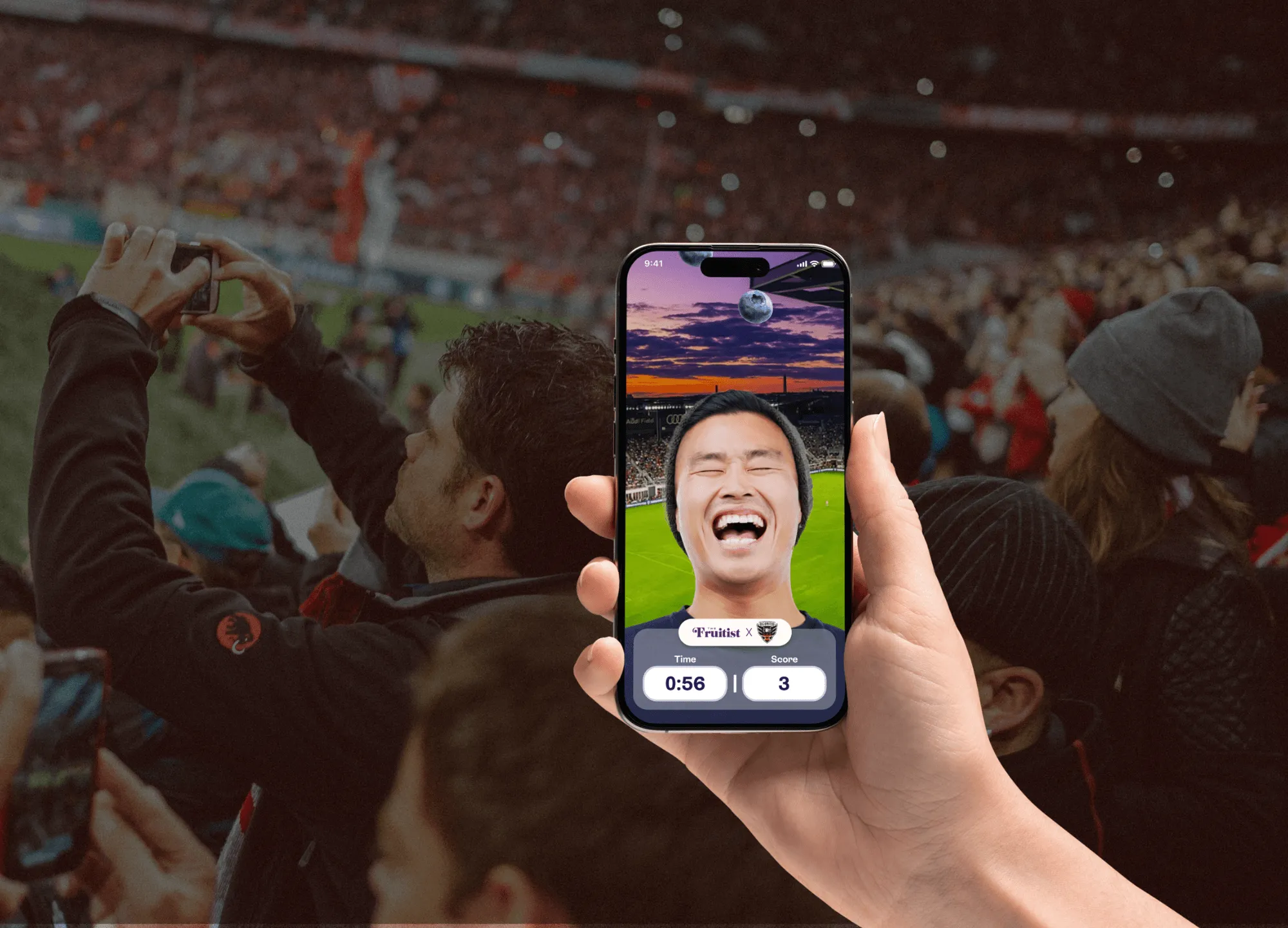
That was the brief for D.C. United: turn downtime into active engagement without disrupting match day, while driving sponsor value and capturing fan data. We built the Blueberry Catch Challenge, an augmented reality mobile game that uses facial tracking so fans catch falling berries on screen, with a live leaderboard, social sharing, and sponsor coupon redemption. It took three months from concept to launch. The aim was simple: passive screen time becomes active participation. See more of this in our work.
In suites and premium hospitality areas, service is the product. If staff know a group’s preferences or special needs in advance, a transaction becomes a white-glove experience. That depends on one shared record, which we look at in how data brings the personal touch back to hospitality.
Pick the friction fans mention most, usually lines or entry, and fix that first. Then use the downtime between plays and periods to give fans something to do. A tool that removes a stress for staff also frees them to act like hosts.
If you run a venue or a club and want to talk through where to start, get in touch.
By removing friction fans notice most: waiting in line, slow entry, and not knowing where to go. Mobile ordering, simple access, and engaging content for downtime can each help. The best tools are the ones fans barely notice.
Yes. In IBM's 2025 survey of 20,864 sports fans across 12 countries, 82% of fans said they use apps during events, and 91% of those engage with them. Real-time commentary, stats, and enhanced in-stadium experiences were the most common reasons.
Turn it into engagement. For D.C. United, we built an AR game fans could play on their phones during downtime, with a live leaderboard and sponsor coupon redemption, so passive screen time became active participation.
Lines cost fans game time and cost venues sales. A kiosk vendor's survey of U.S. sports fans found that 81% said they would buy more if lines were shorter. It is a vendor claim, so treat it as a signal, not a measurement.

Fans remember venues where they spent game time enjoying the event, not fighting to buy food.
Sports & Fan Experience
Sports & Fan Experience
Hospitality