United Network for Organ Sharing
Organ Tracking Solution
- Client

- Sector
- Healthcare
- What we did
- Discovery, UX design, web app development, and deployment
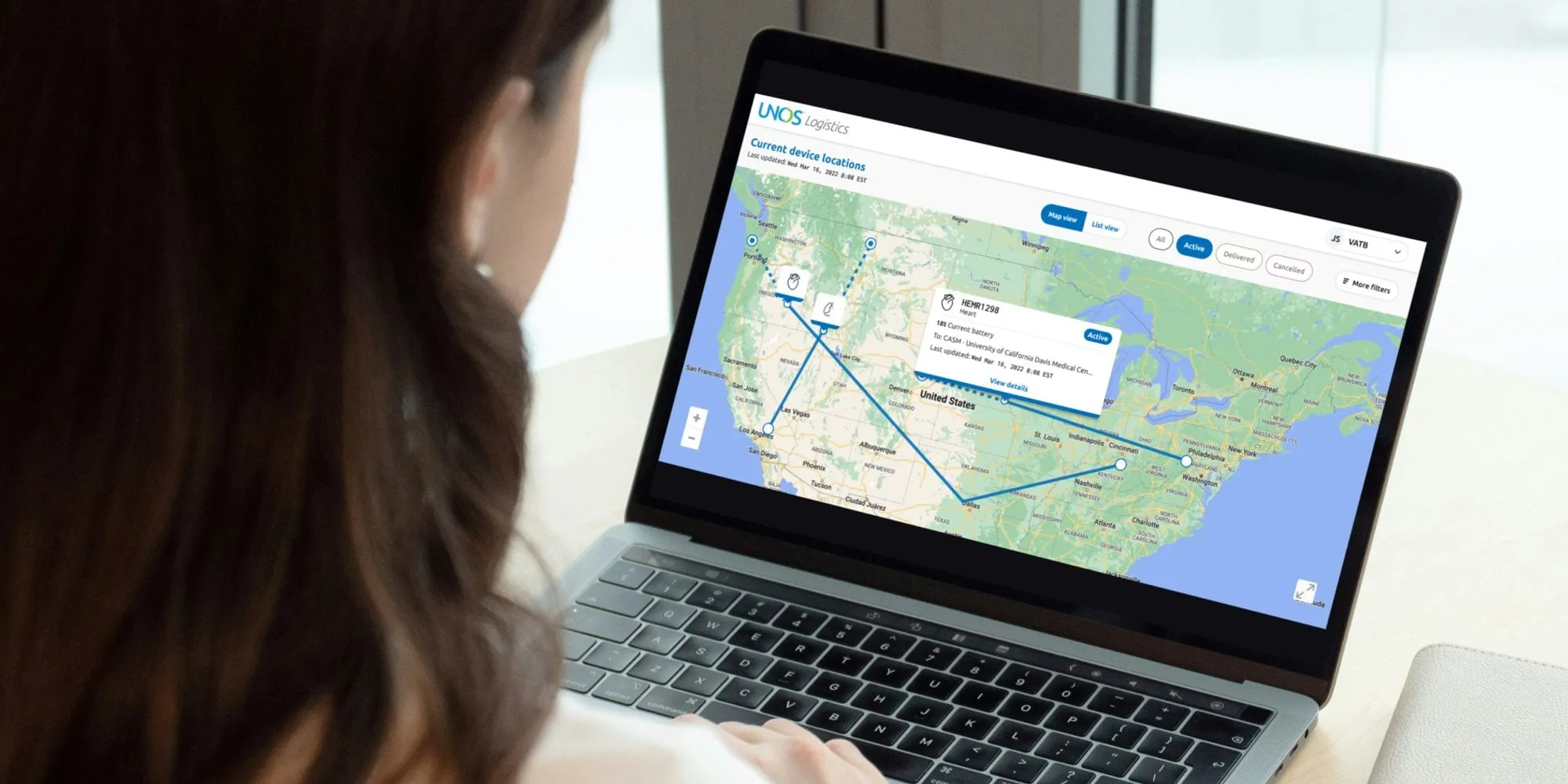
Every organ in transit, in plain sight.
The challenge
The United Network for Organ Sharing (UNOS) is the nation's leader in organ transplant services. When a match is made, UNOS handles the logistics of moving the organ, a critical step limited by how long the organ stays viable. With dozens of organs to track at any given time, rerouted or delayed transits were hard to handle in real time without the right information. UNOS needed a tool that would streamline tracking and give its internal team and its external partners more transparency.
The build
Working with the internal UNOS team, Shockoe took the project from assessment through deployment. A discovery phase of stakeholder interviews and research answered three questions: how delays and reroutes are communicated, what information reaches stakeholders, and how to present the process in a meaningful way.
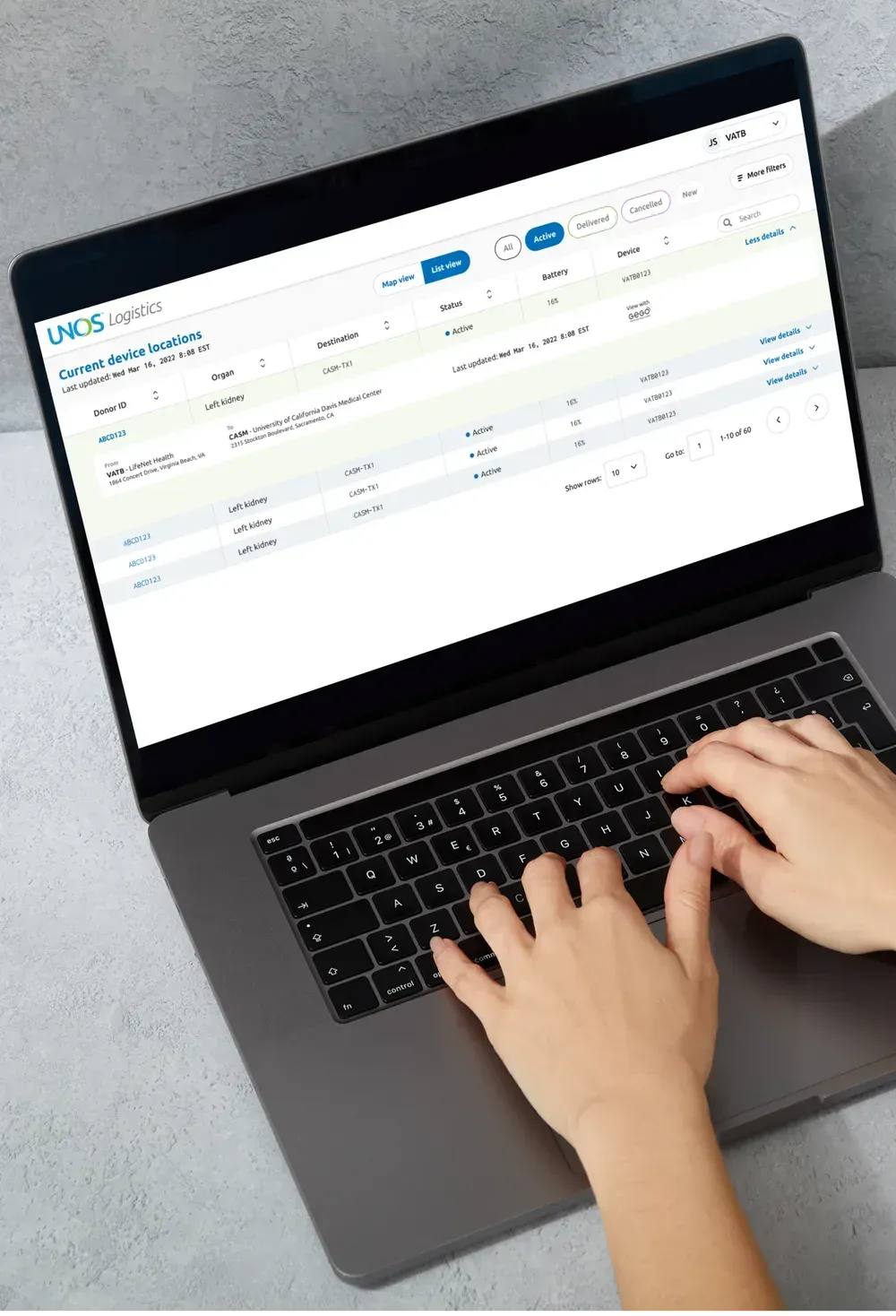
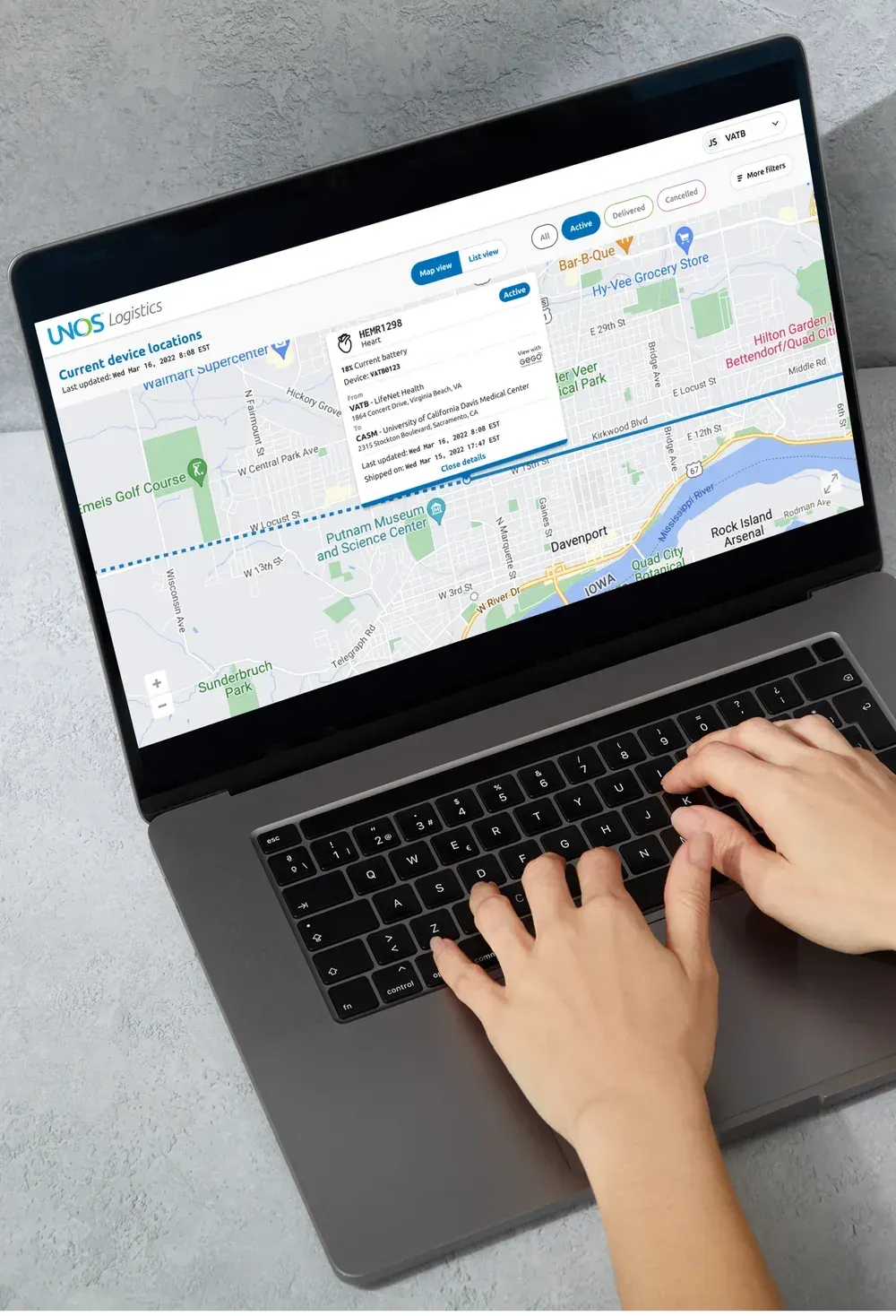
The result is a web-based tracking tool that runs through the UNOS website and shows real-time information for organs in transit. A map view gives partners a visual of each organ's route and status, and a list view gives the UNOS team more detail for each organ, with an option to export. Dotted lines mark organs in transit and solid lines mark completed routes, and hover states show origin, destination, and estimated arrival.
The result
When an organ is delayed or rerouted, every stakeholder can see it and respond appropriately. The UNOS team can scan the dozens of organs in transit in one list, and partners can see which organ is in transit, for how long, and along what route.
Project images


Questions about this project
What does the organ tracking tool do?
It shows organs in transit in real time. Because UNOS tracks dozens of organs at any given time, the tool puts each one's route and status in one place, so a delay or reroute is easy to see and respond to.
Who uses it?
Two audiences: the internal UNOS team, who need to see the details for every organ quickly, and external partners and recipients, who need to see at a glance which organ is in transit, for how long, and along what route.
What do the map and list views show?
The map view shows the route and status of each organ, with dotted lines for organs in transit and solid lines for completed routes. The list view shows more detail for each organ and can be exported. Hovering over an organ shows its origin, destination, and estimated arrival.
Why was it needed?
When a match is made, UNOS handles the logistics of moving the organ, and the time that is available is limited by the organ's viability. Rerouted or delayed transits were hard to handle in real time without critical information.


Build, Buy, or Connect? Modern Logistics Strategy
Every executive room hits the same impasse on digital transformation. Someone draws two columns on the whiteboard, build and buy, and misses the third option.
More Software Won't Fix This
Your associate is on two devices: one shows the order, the other the inventory. They don't talk, so she reconciles them at the curb while the customer waits.
Your Systems Are Running. Your Operation Isn't.
Your call volume is high and your platforms can tell you how many calls came in, but not why.