
Construction & Logistics
Every executive room hits the same impasse on digital transformation. Someone draws two columns on the whiteboard, build and buy, and misses the third option.
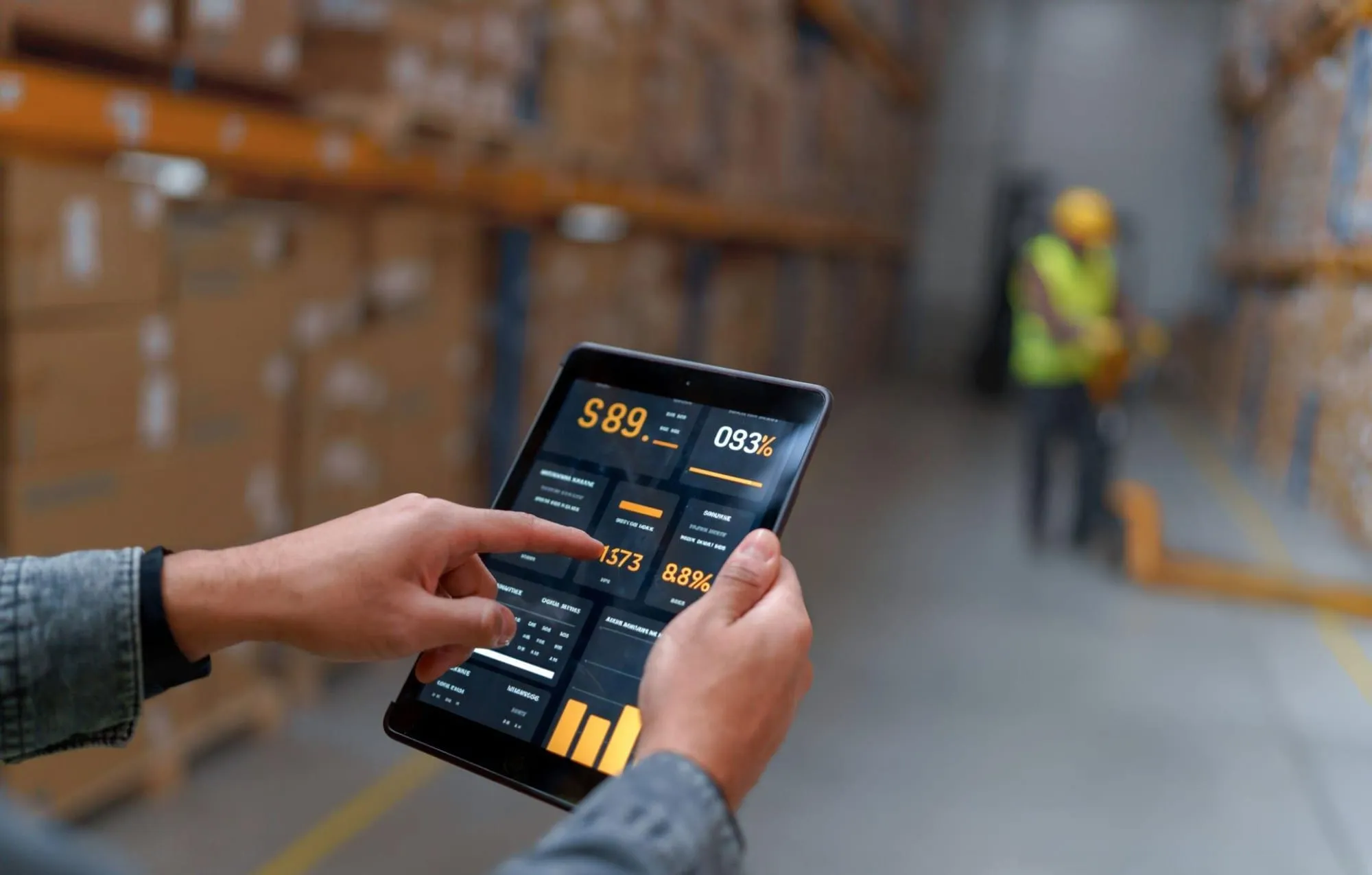
Every executive room reaches the same high-stakes impasse when discussing digital transformation and operational resilience.
Someone draws two columns on the whiteboard. On the left: buy the platform everyone in your category seems to be moving to. On the right: build your own from scratch.
Both columns end with a number that makes the room go quiet and a timeline measured in quarters.
Nobody draws the third column.
There’s a simple reason the conversation narrows so quickly. Almost everyone in the room has something to sell you, and it’s usually an expensive rip-and-replace project.
Platform vendors sell a new system. Development shops sell a new custom build. Both present large line items, and both start from the same premise: that your core enterprise systems are broken.
Sometimes they are.
More often, the systems are doing their jobs. Your ERP closes the books. Your scheduling tool schedules. Your field app captures what it was designed to capture.
What fails is the space between them.
An order in one system gets retyped into another. Two executive dashboards report conflicting numbers for the same operational week. Someone on your team spends Monday morning reconciling spreadsheets because the software can’t share data in real time.
That’s a connection problem.
Replacing everything to fix it is like rebuilding the house because the doors between the rooms stick.
Most modernization delays trace back to one sentence:
“We can’t modernize. We’d have to start over.”
It sounds prudent. It’s usually the most expensive sentence in the roadmap.
Buying a new platform means migrating data you already trust, retraining people who already know their tools, and bending your processes to fit the software’s idea of how your business should work. The parts of your operation that set you apart are often the parts a packaged product handles worst. They become workarounds on day one.
Building from scratch has the opposite problem. You get something shaped around your operation, but you pay to rebuild capabilities that already worked, and you have to wait for them. While you wait, the old systems keep running, the workarounds keep growing, and your team learns to live with the problem you set out to fix.
The risk grows with the size of the project. A McKinsey and University of Oxford study of more than 5,400 large IT projects, each with an initial budget above $15 million, found they ran 45% over budget and 7% over time on average, and delivered 56% less value than predicted.
Neither option is wrong on its own. Both are wrong when they’re the only two on the table.
Connecting means keeping the foundational systems that hold your trusted data, building an integration layer between them, and replacing only the legacy pieces that block growth. The work centers on well-documented APIs, consistent data schemas, and one operational view across the tools your team already uses.
For years, this was the option people skipped because integration work was slow and brittle. Custom connectors took months, and every vendor update risked breaking them. The math pushed everyone toward full replacement.
AI-assisted development has changed that math. Our engineers use it to shorten the path from design to working integration code, which is why connecting systems is now a practical first option instead of a slow compromise.
| Dimension | Build from scratch | Buy a packaged platform | Connect through orchestration |
|---|---|---|---|
| Time to value | High (quarters to years) | Moderate (implementation delays) | Fast (weeks to months) |
| Upfront cost | High custom development expense | High licensing and migration cost | Lower; preserves existing ROI |
| Operational risk | High (rebuilding existing features) | High (data migration and retraining) | Low (no rip-and-replace downtime) |
| Process fit | 100% tailored | Forced workarounds for unique workflows | Optimized around core strengths |
These are general tendencies from our own project experience, not benchmarks. Your numbers will vary with the systems involved.
Before your next build-versus-buy meeting, go through your stack one system at a time and ask four questions.
If finance, operations, or your customers rely on it as the source of truth, keep it. Moving trusted data is where many migrations go wrong.
If your team complains about retyping data, manual reconciliation, or waiting for updates across silos, the bottleneck is an integration gap. The system itself is probably fine.
A system with a usable API can be connected. A system that locks your data away, or one whose vendor has stopped investing in it, belongs on the replace list. Replace it in stages, starting with whatever it’s blocking.
Commodity work like payroll, email, and accounting is worth buying. The workflow that makes your operation faster, or your customer experience better than the next company’s, is worth building on top of the systems you keep.
Most teams that run this exercise find that the replace list is shorter than they expected. The connect list is usually where the value was sitting all along.
At a national freight carrier, the core issue wasn’t the transportation management system (TMS). The dock schedule, the TMS, and the driver app each kept their own disconnected record of the same load, so nobody had a single view of where a truck was supposed to be.
Once all three read from a single source, a scheduling collision was caught before two trucks showed up for the same window. The data now moves with sub-12-second latency at fleet scale. Nothing was replaced. You can see more of this kind of work in our logistics and transportation projects.
Whichever column you end up in, the first step is the same: get a clear picture of three things.
Without that map, evaluating build versus buy is just a guess with a budget attached.
If you want a second opinion, book a 30-minute platform review with our team. We’ll map your systems, identify the gaps, and tell you what we’d keep, what we’d connect, and what we’d build first.
Sometimes a system does need to go. Connecting it first shows you exactly what it's blocking, so you can replace it in stages while the operation keeps running. Many legacy systems that look ready for replacement turn out to work fine once they stop operating in data silos.
Start with two checks: does it expose an API or provide a reliable data export, and is the vendor still maintaining it? If both answers are yes, it can almost always be connected. If not, it isn't automatically off the table, but the connection will cost more and the system belongs higher on the replace list.
When the workflow is central to how you compete and nothing on the market fits it, or when the core system underneath it is past saving. Even then, the build usually goes faster when it sits on top of the systems you keep instead of replacing everything at once.

Connecting your existing systems often costs less upfront and ships faster than replacing everything at once.
Construction & Logistics

Construction & Logistics

Construction & Logistics