
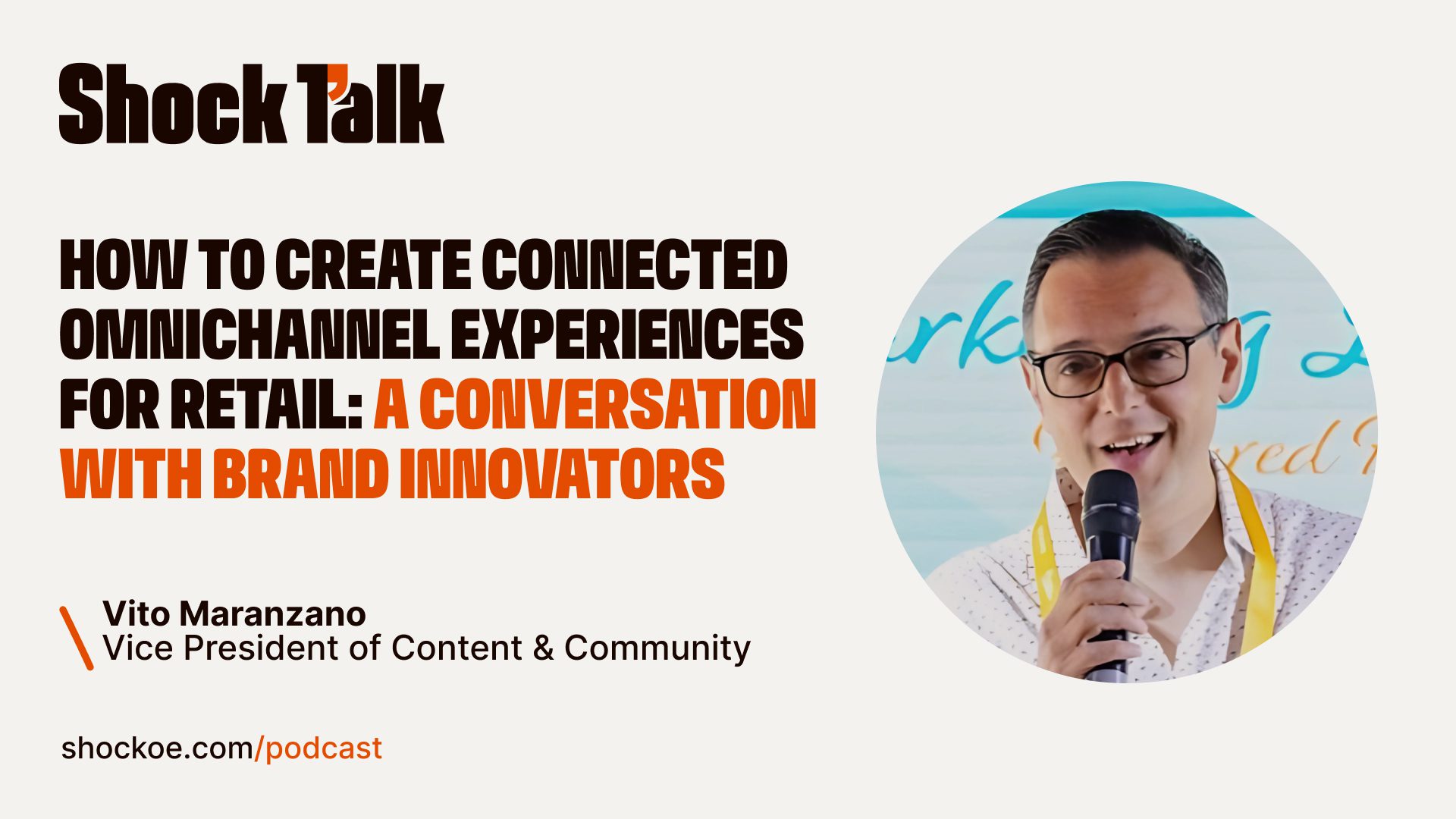
Retail isn't just about transactions anymore—it's about creating experiences that connect. In this episode of ShockTalk, Mike Dayton sits down with Vito Maranzano, VP of Content & Community at Brand Innovators, to unpack what it really takes to deliver unified, customer-first retail experiences.
In this episode of Process Unpacked, host Amir Khorram, Vice President of Meegle US, sits down with Jim Welch, CEO and Founder of The DevHouse Agency. Jim shares the journey of building his multimillion-dollar development studio, specializing in gaming and immersive technologies like AR and VR. From grassroots beginnings to collaborating with industry giants like ExxonMobil, Jim explains how DevHouse organically scaled by addressing challenges head-on and refining its processes over time.
Jim dives into the art and science of project management in the fast-paced world of immersive tech. He highlights how minimalist tools and structured workflows help DevHouse balance creativity and operational efficiency. Jim emphasizes the role of project managers as communication leaders, ensuring clarity and agility in tackling the unique demands of custom software and game development.
Listeners will gain actionable insights on optimizing team productivity, integrating tools, and creating scalable systems to handle complex, iterative projects in the immersive tech space.

Modern retail isn’t defined by what customers purchase—it’s shaped by how they feel. Vito explains that the most successful brands today are creating emotional connections that extend beyond transactions. Citing Bloomingdale’s “place to be” approach and Nike’s in-store app integrations, Vito highlights how brands that foster a sense of belonging drive deeper loyalty.
The shift from transactional to experiential shopping means that customers expect more than convenience—they want identity, inclusion, and community. This is especially true for younger generations who align with values and lifestyle as much as products. Retailers that focus on making people feel something—seen, heard, or inspired—build not just customers, but brand advocates.
The takeaway? Emotion and experience win in a competitive landscape. Brand affinity grows when people feel part of something bigger than themselves.
Retailers have no shortage of data, but too few know how to use it. Vito draws from his time at Macy’s and Brand Innovators to underline a critical truth: brands need to stop drowning in dashboards and start focusing on what really matters.
He notes that fragmented systems and siloed teams often lead to inconsistent customer experiences. Without integrated data strategies, brands lose their ability to personalize and adapt in real time. What’s worse—many still rely on legacy systems that stall innovation and keep teams operating in isolation.
The solution? Use cross-functional teams, shared KPIs, and tech integrations like unified CRMs to build a 360-degree view of the customer. Success comes from simplifying the noise and aligning insights to actions.
Great retail experiences start when marketing, operations, and digital work from the same data story.
As Vito puts it, “Personalization is about being helpful—not invasive.” With rising privacy concerns, GDPR, and cookie limitations, brands can’t afford to get this wrong. The most effective personalization strategies rely on relevance, timing, and transparency.
He stresses the need for opt-in experiences and contextual relevance, not hyper-targeted spam. At Macy’s, that meant offering early access, VIP perks, and exclusive experiences—not just discounts. The goal wasn’t to sell more, but to make customers feel understood.
Done right, personalization enhances trust and loyalty. Done poorly, it erodes both. Vito encourages brands to focus on creating value-driven moments based on actual customer behavior, not just inferred preferences.
True personalization listens before it speaks—and always offers something worth the customer’s attention.
Retail innovation thrives when brands move beyond product pushes and start telling better stories. Vito shares how content and community aren’t just marketing tactics—they’re strategic levers for long-term growth.
He points to examples like Sephora’s Beauty Insider platform and 7-Eleven’s car culture campaign as case studies in how content can fuel loyalty. These brands didn’t just sell—they built spaces where customers could share, contribute, and feel seen.
Live shopping, user-generated content, and loyalty programs that offer more than points are part of a larger movement: transforming buyers into brand believers. Content becomes connective tissue that informs, entertains, and builds trust. Community turns transactions into relationships.
Retailers who treat the community like a channel—not a side project—position themselves for relevance and resilience.
Timestamp: [00:08:00]
Vito shares how Brand Innovators adapted rapidly during the early days of COVID-19 by shifting to a high-volume virtual event model. This pivot helped marketers stay connected during a period of immense uncertainty. He explains how they didn’t just maintain relevance—they expanded the community, increased programming to over 60 hours per week, and built a new retail segment that now includes luxury and AI series. This period of forced innovation helped evolve the organization from an event platform into a full-blown content and community engine.
They switched to virtual very quickly and… started to create an ecosystem for all of these marketers who had no idea how to proceed, what to do… I saw that they were pumping out… almost 60 hours a week of content… and thought there was another opportunity to build out specifically around retail because of how complex retail marketing is.”
Timestamp: [00:20:00]
Vito highlights the problem of inconsistent customer experiences across channels—especially in legacy retail environments. He points out that consumers don’t see digital vs. in-store as different—they only see the brand. Fragmented pricing, outdated systems, and siloed departments all contribute to friction that erodes trust. The goal is a seamless experience across mobile, web, and in-person—one brand, one message.
Customer expectations don’t differentiate between channels, so your tech shouldn’t either… you can’t have a scenario in one and not in the other… the customer doesn’t get that. It’s not part of a successful customer journey.”
Timestamp: [00:22:00]
Reflecting on his time at Macy’s, Vito explains how internal silos hold brands back. He emphasizes the importance of treating retail as an ecosystem rather than separate business units. Marketing needs to operate as a hub connecting media, loyalty, ecommerce, and merchandising. Shared KPIs and unified tech stacks are critical to breaking down walls and aligning everyone around customer outcomes.
Cross-functional teams are key… I touched all aspects of marketing—media, loyalty, e-comm, merchandising… You have all these conflicting internal teams fighting for the same ad dollars… It’s really about understanding how to satisfy all with Macy’s as the brand in mind.”
Timestamp: [00:23:00]
Retail media isn’t just a buzzword—it’s a way for brands to bridge digital and physical spaces while monetizing their ecosystems. Vito discusses how these networks are helping retailers connect brand strategy, tech integration, and customer insights to drive new revenue. With tools like AI, CRM, and first-party data, retail brands can now act more like publishers—creating ad experiences that feel aligned with the shopping journey, not disruptive.
Another buzzword today is… how do you capitalize on your retail media networks… That gives you an opportunity to monetize in-store digital, to bridge the gap between physical and digital strategies… and deliver what your consumer base is looking for.”
[00:13:00]
Mike Dayton: “It kind of made me think that, yeah, this is—for brick-and-mortar retail to remain relevant, right? In this age of instant delivery, instant gratification—they’ve gotta really bring something more than just a place to go buy stuff.”
[00:18:00]
Mike Dayton: “Your app should not distract. Our ethos is your app should allow you to look up. We don’t want the app experience to be the immersive thing—we want where you are physically to be the immersive part.”
[00:40:00]
Mike Dayton: “Stop thinking in channels and really think in customer journey. Customers don’t see online versus in-store. What they see is one brand.”
[00:14:00]
Vito Maranzano: “It’s not just shopping for product, it’s actually experiencing the brand when you're there. You have your brand DNA, you have your brand voice, and you have a reason for being. The more connected the customers feel, the more likely they are to return—not just to buy, but to belong.”
[00:22:00]
Vito Maranzano: “Cross-functional teams are key. Everyone has different initiatives, but the customer only sees one brand. So it's about bringing all the pieces together and asking, how do we make this work for them?”
[00:32:00]
Vito Maranzano: “Your personalization efforts should feel helpful, not intrusive. It should be based on actual behavior, not assumptions. You’re not spying—you’re listening and responding in a way that makes the customer feel understood.”
Discover Shockoe's thought leadership and best practices in apps and digital experiences. Shockoe’s content provides marketing leaders of heritage brands with cutting-edge insights to modernize their digital presence while preserving their identity.

This survey is designed to help heritage and iconic brand leaders objectively assess their current level of digital maturity and readiness for developing mobile apps and immersive experiences.