
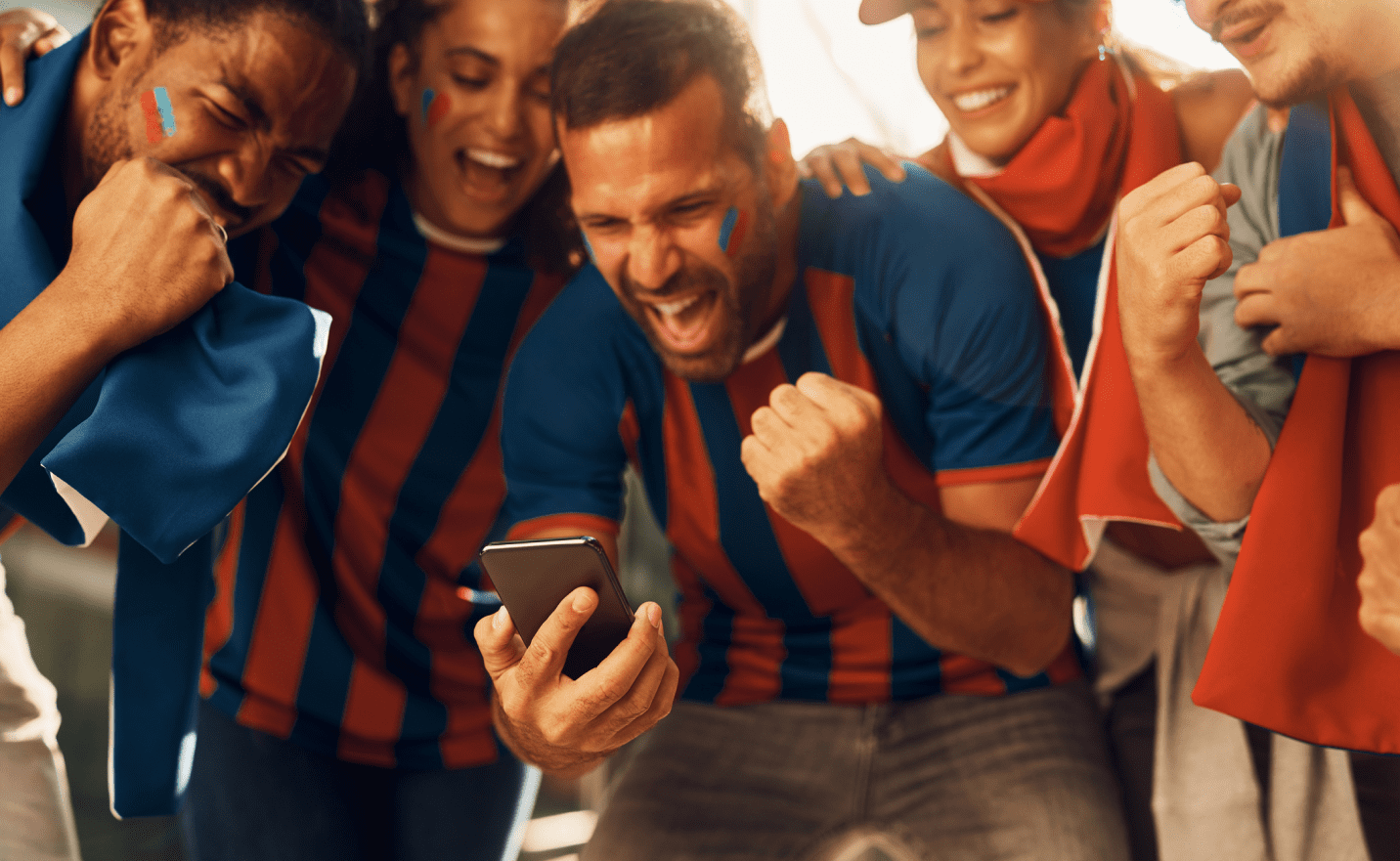
Immersive experiences bring the wow factor for sports teams, venues, and leagues. By harnessing AR and VR, these interactions elevate fan engagement, making your brand memorable and creating deep emotional connections with your audience.
In today’s age of hyper-personalization, fans expect more than just passive viewing—they want to be part of the experience. Immersive technologies provide the perfect platform for sports brands to meet these expectations, creating experiences that are both memorable and impactful.
 An immersive experience alters the physical environment and builds on it to enhance reality. The experience feels genuine, and users can empathize, be inspired, and learn on a whole new level.
Let’s Talk About Immersive
An immersive experience alters the physical environment and builds on it to enhance reality. The experience feels genuine, and users can empathize, be inspired, and learn on a whole new level.
Let’s Talk About Immersive
Key Takeaways:
- AR creates immersive experiences that elevate brand activation.
- Integrated experiences build emotional connections that grow your brand.
- Experiences linger longer with consumers than physical products.
- 91% of consumers view brands more favorably after attending events and experiences.
- AR and VR remove usual marketing restrictions, making almost anything possible.
Defining the Immersive Experience
An immersive experience alters the physical environment and builds on it to enhance reality. With technology, users can see, hear, and interact with elements not physically in front of them. The experience feels genuine, and users can empathize, be inspired, and engage on a whole new level. Sight, sound, and touch should all be used to make the experience captivating and engaging. Let’s Talk About ImmersiveImmersive Experiences are Essential for Sports Brands
Research shows that experiential purchases make people happier than material purchases. Prioritizing experiences over products creates a deeper connection with fans. By designing immersive experiences to incorporate your brand, your audience can enjoy the experience while learning about and engaging with your brand. This leads to more informed, faster decisions and provides the seamless experience fans expect today. The age of hyper-personalization is upon us, and an immersive experience can deliver content unique to your target audience. It can make your team more relatable, engendering current fan loyalty and attracting new ones. Let’s examine how your sports brand can use AR technology to create immersive experiences and brand activation to engage and convert. Marketers seek new ways to develop more profound and personal connections with their target audience and find brand activation a powerful tool.- 91% of consumers say their feelings about brands are more favorable after attending events and experiences.
- 85% of consumers are more likely to purchase a product or service after a live marketing event.
- 98% of consumers who create digital or social event content share it.
An immersive experience alters the physical environment and builds on it to enhance reality. The experience feels genuine, and users can empathize, be inspired, and learn on a whole new level.
Let’s Talk About Immersive
Immersive Technologies Elevate Brand Awareness
In the competitive world of sports, making your brand stand out is essential. A good experience supports loyal fans while attracting new ones. Immersive technologies like augmented reality (AR) and virtual reality (VR) offer sports teams, venues, and leagues the tools to create unique, interactive fan experiences that elevate your brand above the noise to captivate and build lasting brand loyalty.Immersive Experiences Deepen Fan Engagement
Engaging fans goes beyond capturing their attention; it’s about building lasting connections. Immersive experiences offer a powerful way to deepen fan engagement by creating personalized, interactive environments that resonate on a personal level. At MexTour, the MultiBall LED system fused sports with gaming, transforming fan interaction into a vibrant, dynamic experience. Similarly, the PGA Tour’s AR feature allows on-site fans to replay shots in 3D, view detailed shot data, and immerse themselves in the action by pointing their phone at featured holes, enhancing their connection to the tournament.Examples of Immersive Brand Experiences in Sports
Immersive brand experiences can take many forms and be used differently, powered by today’s technology:- In-Stadium Experiences: Implement AR and VR during live events to provide virtual tours, interactive games, or real-time statistics. For instance, Frito-Lay’s Human Claw Machine at the Super Bowl allowed fans to participate in a larger-than-life arcade game, creating a memorable connection between the brand and the audience.
- Interactive Fan Zones: Create fan zones that use AR and VR to engage attendees on-site. The MultiBall LED system at MexTour transformed fan engagement by offering a fusion of sports and gaming, boosting interaction and creating a vibrant atmosphere.
- Gamified Experiences: Introduce gamified elements like trivia contests or virtual challenges. The Denver Broncos’ Trivia Touchdown experience offered fans an interactive game show-style activation, enhancing fan involvement and creating excitement beyond the game.
- Augmented Reality Replays: The PGA Tour’s AR experience lets on-site fans replay shots in 3D, view detailed shot data, and immerse themselves in the action by pointing their phone at featured holes. Fans can capture and share these moments on social media.
